What Is a WEFAR Type Check Valve and How Does It Prevent Backflow in Piping Systems?
In industrial piping systems, maintaining the correct fluid flow direction is essential for safe, efficient operation. Reverse flow can damage equipment, disrupt processes, and affect pump performance. This is where check valves play an important role.
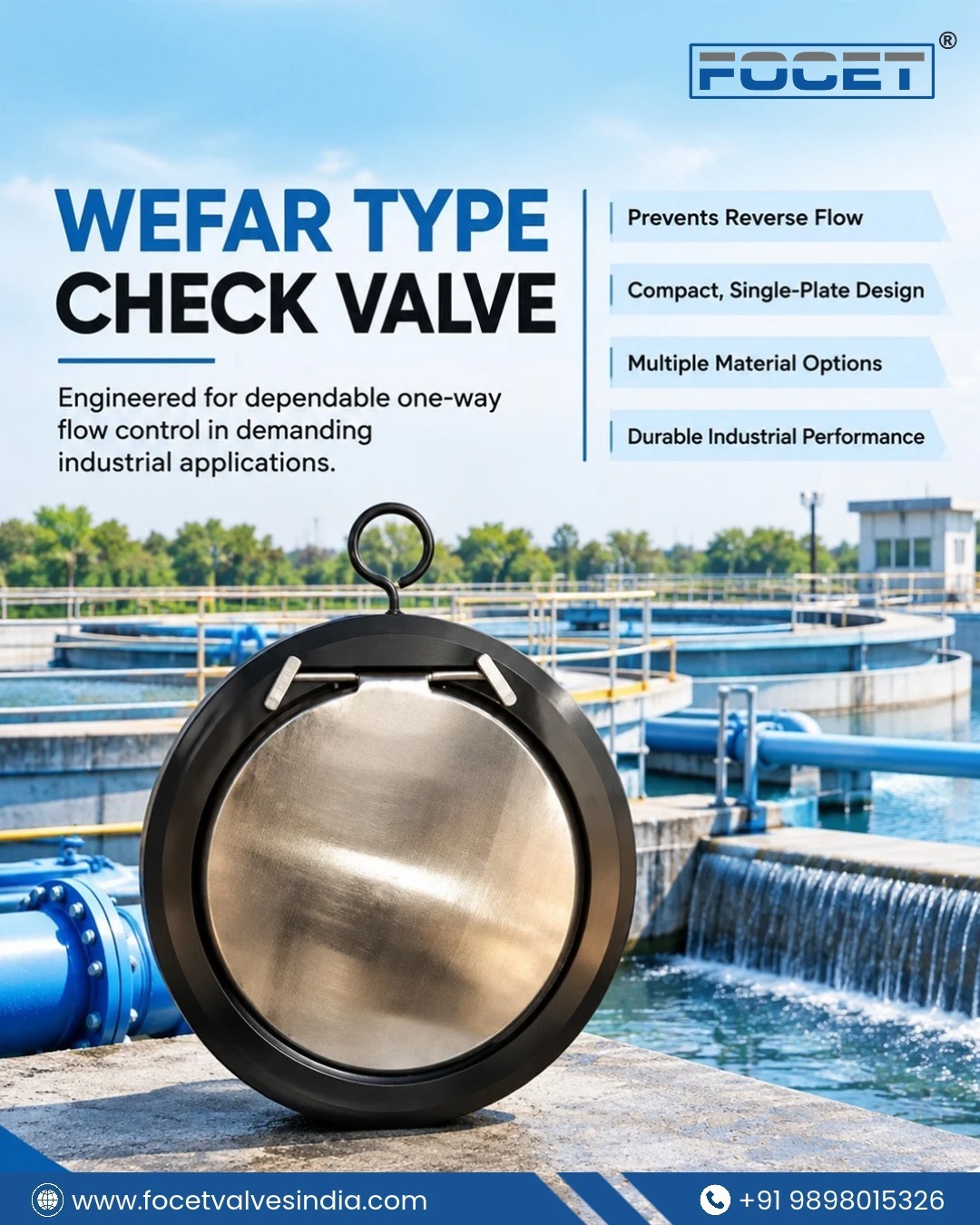
A WEFAR Type Check Valve is a product-specific term associated with a particular valve design or product range. Check valves generally allow fluid to flow in one direction while automatically restricting reverse flow. They are widely used in water supply systems, pumping stations, industrial pipelines, and fluid-handling applications.
Engineers, maintenance professionals, and industrial buyers need to understand how check valves operate, their applications, benefits, and selection criteria to choose the right solution.
Focet Valves Pvt Ltd specialises in industrial valve solutions for fluid management. Selecting the appropriate valve requires careful consideration of operating pressure, flow rate, fluid characteristics, connection type, and system requirements.
What Is a WEFAR Type Check Valve?
A check valve is an automatic flow-control device that permits fluid to flow in one direction while restricting flow in the opposite direction. Unlike manually operated valves, conventional check valves respond to pressure and flow conditions without requiring routine manual operation.
When upstream pressure overcomes the valve’s closing force, the internal closure element opens. When forward flow decreases, or reverse pressure develops, the element moves toward its seat to prevent backflow.
Verify the exact construction, operating mechanism, pressure rating, and material specifications of a WEFAR Type Check Valve against the relevant manufacturer’s documentation
Depending on the design, check valves may use a disc, ball, swing mechanism, spring-loaded element, or another closure arrangement.
How Does a WEFAR Type Check Valve Prevent Backflow?
A check valve's main purpose is to maintain the intended direction of fluid flow through a piping system.
1. Forward Flow Begins
When fluid enters from the designated inlet, pressure acts on the internal closure element. If the opening force exceeds the closing force, the valve opens and allows fluid to pass.
2. Fluid Moves Through the Valve
Once open, the valve permits fluid to move through the pipeline. Flow capacity and pressure loss depend on the valve design, nominal size, fluid properties, and operating conditions.
3. Forward Flow Decreases
When a pump stops or forward flow decreases, the force keeping the valve open decreases. Depending on the design, gravity, a spring, or changing pressure conditions can move the closure element toward the seat.
4. Reverse Flow Is Restricted
If downstream pressure exceeds upstream pressure, the closure element moves toward its closed position. This helps restrict fluid from flowing backwards through the pipeline.
Important: A check valve helps prevent reverse flow, but it cannot guarantee zero leakage under every operating condition. Performance depends on valve design, sealing condition, pressure differential, and correct installation.
What Are the Main Components of a Check Valve?
Components vary by valve design. Common elements include:
· Valve Body: Houses the internal mechanism and connects the valve to the pipeline.
· Closure Element: A disc, ball, flap, or other component that opens and closes the flow passage.
· Valve Seat: Provides the sealing surface when the valve closes.
· Spring Mechanism: Helps return the closure element toward its closed position in spring-loaded designs.
· Hinge or Guide Mechanism: Controls the closure element's movement where required.
· Seals and Gaskets: Help maintain sealing at designated connection points.
Always consult the applicable technical datasheet to confirm the construction and specifications of a particular WEFAR Type Check Valve.
What Are the Different Types of Check Valves?
Understanding common check valve designs can help industrial buyers identify an appropriate solution for their piping systems.
1. Swing Check Valve
A swing check valve uses a hinged disc that moves away from the seat during forward flow. When flow reverses, the disc returns toward the closed position.
These valves are commonly used in water distribution systems, pumping applications, and industrial pipelines where the design and installation conditions are suitable.
2. Lift Check Valve
A lift check valve uses a disc or piston that moves away from its seat under sufficient forward pressure. It returns to its seat when pressure conditions change.
Its suitability depends on the fluid, pressure requirements, flow characteristics, and installation arrangement.
3. Spring-Loaded Check Valve
A spring-loaded check valve uses a spring to assist closing. Forward pressure must overcome the spring force and other resisting forces to open the valve.
This design may suit applications that require a compact arrangement or specific closing characteristics.
4. Ball Check Valve
A ball check valve uses a ball as its closure element. Forward flow moves the ball away from the sealing area, while reverse pressure moves it toward the seat.
These valves are used in selected water, wastewater, and fluid-handling applications, depending on their construction and compatibility with the medium.
The correct choice depends on operating pressure, flow rate, fluid properties, installation position, and the potential for water hammer or other transient conditions.
What Are the Applications of WEFAR Type Check Valves?
Check valves serve important functions in industries where uncontrolled reverse flow can affect equipment, process efficiency, or system reliability.
Water Supply Systems
Check valves help maintain the intended flow direction in water distribution pipelines and related equipment. The selected valve must suit the water quality and operating conditions.
Pumping Stations
A properly selected check valve can help limit reverse flow when a pump stops. Depending on the system design, this can help reduce reverse rotation and protect connected equipment.
Industrial Process Pipelines
Manufacturing facilities use check valves in compatible fluid systems to restrict unwanted reverse flow between pipeline sections, pumps, and process equipment.
HVAC and Cooling Systems
Check valves can help maintain the intended circulation direction in suitable heating, ventilation, air conditioning, and cooling systems.
Wastewater and Water Treatment Plants
Water treatment facilities use suitable check valves in pumping and fluid-transfer lines. When selecting a valve, consider material compatibility, solids content, pressure conditions, and maintenance requirements.
Chemical and Industrial Fluid Handling
Industrial plants may use check valves in compatible chemical and process-fluid applications. The valve body, internal components, and sealing materials must suit the specific medium.
How Do Check Valves Support Water Treatment Valves and Industrial Flow Control Solutions?
Water treatment facilities require reliable fluid movement through filtration, pumping, storage, and distribution stages. Check valves help restrict reverse flow and support these systems' intended operation.
As part of broader Water Treatment Valve requirements, select the right check valve based on fluid composition, operating pressure, temperature, flow rate, and installation conditions.
Similarly, effective Industrial Flow Control Solutions depend on selecting compatible valves for each pipeline function. Check valves complement other valve types by providing automatic one-way flow control rather than routine manual regulation.
For optimal performance, engineers should evaluate the complete piping system, including pump characteristics, pressure fluctuations, closing response, and maintenance access.
What Are the Benefits of Using a Check Valve?
A properly selected and installed check valve can provide several operational benefits.
· Backflow Prevention: Helps restrict reverse flow in pipelines.
· Equipment Protection: Can help reduce the risk of reverse-flow-related problems affecting pumps and connected equipment.
· Automatic Operation: Responds to flow and pressure conditions without routine manual intervention.
· Process Reliability: Supports the intended direction of fluid movement.
· System Integration: Can be incorporated into compatible water, industrial, and fluid-transfer systems.
· Maintenance Support: Appropriate selection and periodic inspection can help maintain reliable operation.
Actual performance depends on valve design, installation, operating conditions, and maintenance practices.
How to Select the Right WEFAR Type Check Valve
Choosing the right valve requires more than matching the pipeline diameter. Industrial buyers and engineers should assess the following factors.
1. Operating Pressure and Temperature
Confirm the system’s normal and maximum operating conditions against the valve’s rated limits.
2. Fluid Type and Compatibility
Identify whether the medium is clean water, wastewater, a chemical solution, or another industrial fluid. Ensure that body, trim, and sealing materials are compatible.
3. Flow Rate and Pressure Drop
Evaluate the required flow capacity and acceptable pressure loss to ensure that the valve suits the system’s operating requirements.
4. Pipeline Size and Connection Type
Check the nominal diameter, connection standard, face-to-face dimensions where applicable, and available installation space.
5. Closing Characteristics
Consider the possibility of water hammer, sudden pump shutdown, pressure fluctuations, and reverse-flow velocity. The appropriate closing response depends on the complete system design.
6. Technical Documentation
Review the manufacturer’s datasheet for materials, pressure rating, temperature limits, applicable standards, installation requirements, and maintenance recommendations.
7. Supplier Support
Work with a reliable industrial valve supplier who can clarify specifications, product suitability, and documentation requirements before you place an order.
Why Choose Focet Valves Pvt Ltd for Industrial Valve Requirements?
When sourcing industrial valves, buyers should prioritise technical suitability, consistent product specifications, and clear communication.
Contact Focet Valves Pvt Ltd to discuss industrial valve requirements and identify suitable options for your application. Buyers looking for a WEFAR Type Check Valve should confirm the exact model, construction, available sizes, materials, and pressure ratings with the company before purchasing.
For international procurement, buyers should also verify applicable export documentation, delivery terms, certifications, and destination-specific requirements.
Businesses searching for a WEFAR Type Check Valve Manufacturer in India, a Check Valve Supplier in Gulf Countries, or an Industrial Valve Supplier in Poland should evaluate product specifications, application compatibility, and supplier capabilities before making a decision.
Contact Focet Valves Pvt Ltd to discuss your piping system requirements and request relevant technical information.
Frequently Asked Questions (FAQs)
1. What is a WEFAR Type Check Valve?
A WEFAR Type Check Valve is a product-specific valve designation. Check valves generally allow fluid to flow in one direction and restrict reverse flow. Confirm the exact WEFAR model and specifications through the manufacturer’s documentation.
2. How does a check valve prevent backflow?
It uses an internal closure element that opens under suitable forward pressure and moves toward the valve seat when forward flow decreases or reverse pressure develops.
3. Where are check valves commonly used?
They are used in water supply systems, pumping stations, industrial pipelines, cooling systems, and suitable water treatment and fluid-handling applications.
Keywords